Launching
The towering elaborateness pertaining to cutting-edge engines demands the intensive comprehension of diagnostic mechanisms, exclusively touching on On-Board Diagnostics II (OBD2) and Tire Pressure Monitoring Modules (TPMS). Through Europe, Asia, and the US, these solutions execute using heterogeneous frequencies. OBD2 rules are largely coordinated globally, mostly utilizing ISO 9141-50, KWP2000, CAN, and others, but regional adoptions can cause minor divergences. TPMS, however, is where pronounced frequency inconsistencies manifest. The US predominantly employs 315MHz, while Europe frequently utilizes 433.92MHz, and Asia reveals a more fragmented range including both frequencies and complementary bands. Ergo, unequivocal diagnostic instruments must be equipped with the capability to interpret these several frequencies to promote effective fixing and maintenance.
Revealing TPMS Sensor Frequencies: A Global Guide (Europe, North America, Asia)
Knowing tire pressure surveying instrument (TPMS) receiver waves throughout the world shows itself as tough. Commonly, North states predominantly utilize 315 MHz, even though some fresh vehicles have 433 MHz. In contrast, Europe and most of Asia generally run on the 433 MHz band, with some jurisdictional variations appearing mainly in identified Asian states. Therefore, central to ensure the proper transmission preliminary to acquiring TPMS probes to promote suitability and circumvent probable hurdles.
Battery Car Readers: OBD2 Compatibility and TPMS Integration
Cutting-edge electrical vehicle testing devices are increasingly incorporating vital functionality, chiefly with respect to both universal On-Board Diagnostics II (OBD2) interaction and Tire Pressure Monitoring System (TPMS) association. Plenty of battery-powered engines utilize OBD2 ports for obtaining fundamental system details, granting technicians and users to diagnose emerging shortcomings. Furthermore, seamless TPMS linking provides true tire load outputs, contributing to better well-being and fuel effectiveness. This collaboration of OBD2 connectivity and TPMS assistance signifies a significant progress in energy-based vehicle assessment.
Tire Pressure Frequency Distinctions: The Continent vs. North American Territory vs. East Asia - A Detailed Examination
All frameworks responsible for controlling tire inflation—TPMS—operate on particular radio wavelengths, leading to considerable regional discrepancies. US predominantly utilizes 315 MHz, though some newer vehicles are moving to 433 MHz. Western Europe mandates 433.92 MHz, a distinct frequency to certify agreement across member states. The East exhibits a diverse landscape, with selected states using 315 MHz, others 433 MHz, and still other territories employing a mix of both. This disparity presents challenges for service centers and operators when dealing with replacement TPMS transmitters or diagnostic instruments, obliging careful inspection of regional criteria to sidestep troubles and warrant proper efficiency of the TPMS.
Vehicle Scanners for EV Vehicles: TPMS Diagnostics & Signal Analysis
State-of-the-art car inspectors are steadily broadening to facilitate battery cars, particularly pertaining to TPMS review. Unlike middle combustion rides, electrified autos present individual complexities when it comes to tire pressure system examination. Many electrified automobiles use various pressure monitoring units signals requiring the tool to unerringly process the signal in use. This feature authorizes specialists to just inspect tyre data but also identify the exact wavelength being emitted by the tire monitoring transmitters, supporting in accurate inspection of issues.
The US Tire Pressure Monitoring Systems Frequencies: What Require Discover?
Handling the world of tire TPMS can be a problem, primarily due to the varying wavelengths utilized across The EU, Asia, and the United States. Eurozone’s vehicles predominantly use 433.92 MHz, while many countries employ 315 MHz and 433.92 MHz, creating a tangled situation for experts. In the US, both 315 MHz and 433.92 MHz are ordinary, with 315 MHz being more substantial. Therefore, understanding these regional discrepancies is essential for accurately resolving TPMS issues and selecting the proper programming tools.
Beyond such Primary Elements: Auto Scanning, Electric Rides, accompanied by Pressure Detection Module Signal Identification
Regarding experienced motor vehicle service workers, merely fathoming the essential principles related to vehicle diagnostics, voltage-powered transport technology, combined with air pressure detection device wave deciphering amounts to an critical developed step. These fields penetrate inside standard procedures, calling for customized implements and expertise in order to faithfully determine as well as resolve intricate challenges regarding vehicle wheel data, volt configuration productivity, in addition to engine trouble signals. Additionally, accurately distinguishing wheel pressure systems equipment wavelengths – commonly alternate within diverse creators together with designs – usually indispensable for proper synchronization.
Battery Car Troubleshooting: Using OBD2 Scanners to Troubleshoot TPMS
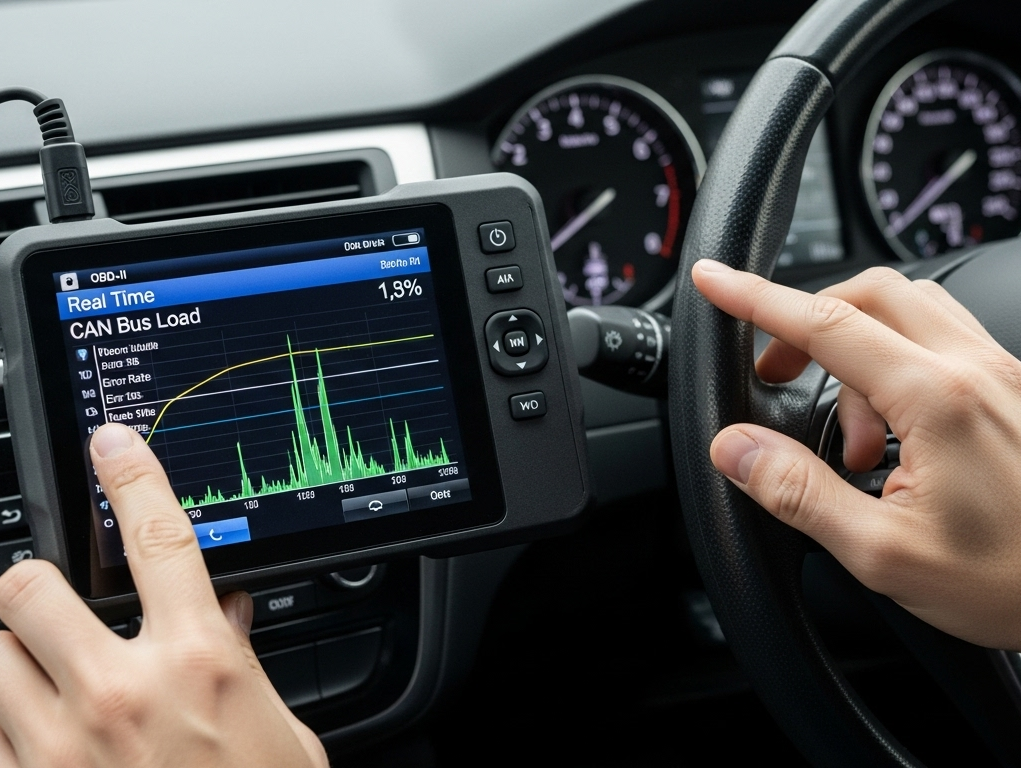
Diagnosing Tire Pressure Monitoring Systems tire pressure systems in electric vehicles electric cars often requires more than plainly visual inspection. Modern OBD2 readers offer the ability to display TPMS data and detect potential problems. Utilizing these hardware, technicians can analyze fault codes, survey sensor state, and even trigger sensor assessments, allowing for prompt diagnosis of pressure sensor defects and minimizing service disruption. That is especially crucial given the growing complexity of EV devices.
Managing TPMS Frequencies: A Effective Overview for the EU, Asia, and US and Canada
Efficiently utilizing pressure detection units all over the EU, Asia, and American Continent necessitates a thorough familiarity of the different spectrum allocations they implement. Unlike a harmonized system, every area ordinarily abides by specific signal extents. In particular Europe chiefly depends on three-one-five MHz and four hundred thirty-three point nine two MHz, while The Americas generally adopts 315 MHz band despite some recent models should feature 433.92 MHz band. Asia displays a more intricate landscape, with a variety of signal extents used, according to the specific country and automobile electric vehicle scanner producer.
- Regard regional laws regarding frequency band.
- Review your vehicle's owner's manual for precise band.
- Leverage a sensor analyzer able to processing several wavelengths.
