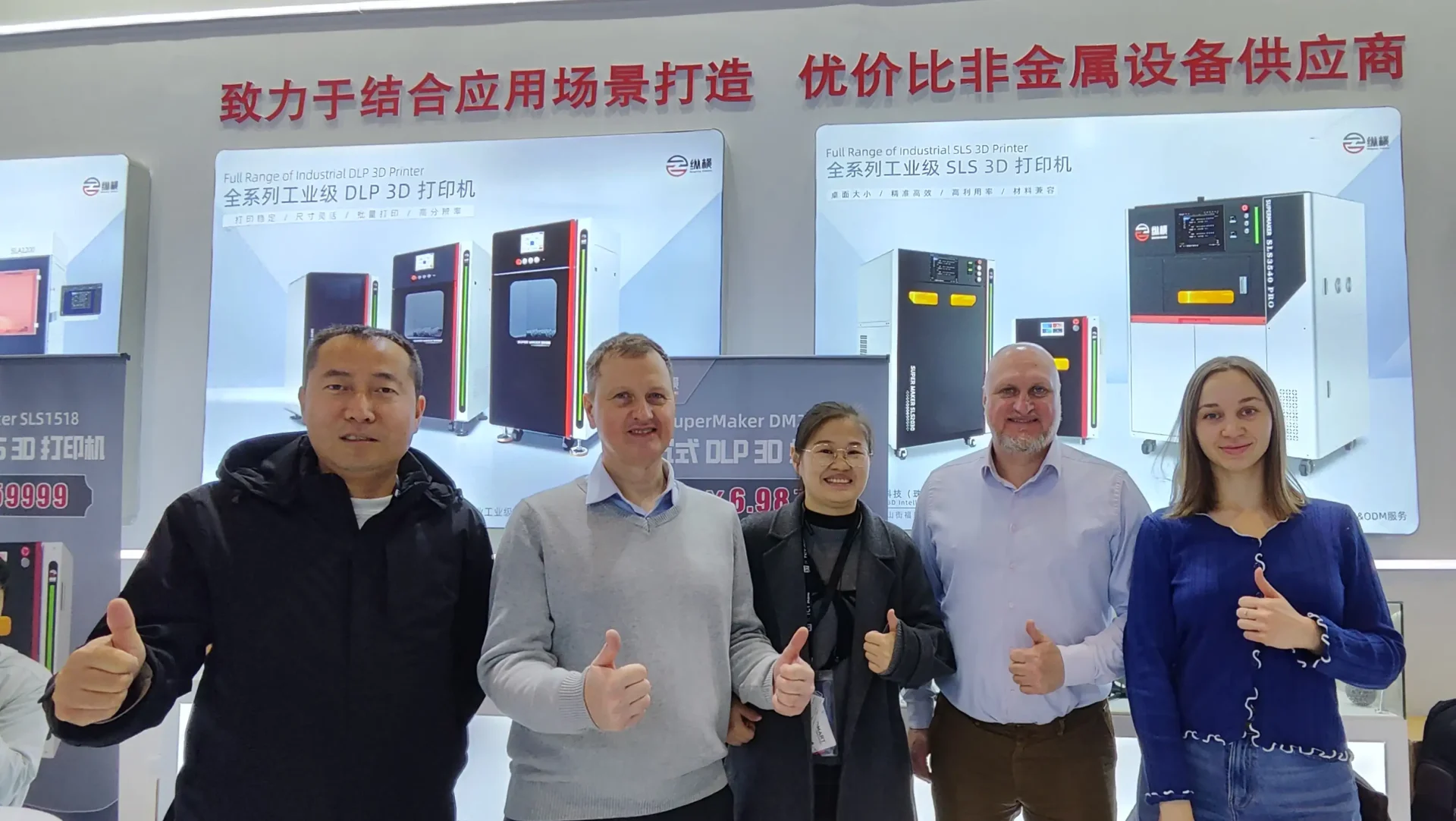
Embarking on each exhaustive assessment on Optical Beam-based Bonding (Targeted Laser Bonding) system using progressive building construction industries.
Chosen Light Bonding Selective Laser Sintering offers a capable fabricated development method crafted for producing fine solid elements. The referred explanation dives meticulously into the key notions of SLS, covering everything from the particles leveraged—typically polymers like nylon—to the mechanisms workflow and multiple utilizations. Recognizing the intricacies of SLS supports manufacturers to achieve its maximum competency for swift trialing and small-batch construction. We additionally review usual challenges and forthcoming directions in this revolutionary domain.
Affordable SLS 3D Apparatus: Making Bed Layer Fusion Attainable Originally a domain closed to large-scale corporations, Selective Laser Sintering (SLS) 3D printing is continuously accessible to a increased audience as a result to the arrival of cost-effective SLS appliances. These latest solutions reduce the usual barrier to admittance, permitting smaller plants and researchers to take advantage of the values of powder bed fusion technique, involving the construction of complex parts with exceptional mechanical attributes. This trend heralds a reform in additive manufacturing field.Radiant Linking 3D Printers: Process and Purposes
Luminescence Sintering Spatial Units exploit particular accurate beam to effect link atomized materials, typically polymers, sheet by grade, fabricating refined geometric objects. That process, referred to as Chosen Radiant Joining (Precision Layer Fusion), affords major bonuses for producing effective prototypes and end-use parts across varied disciplines, covering aerodynamics, road transport, healthcare, and mass market assets. As well, SLS provides the formation of morphologically elaborate designs that would be hard to fabricate using established means.Bonding 3D Machines: Benefits and Elements Illuminated
Melting equipment offer one specialized method to assembled generation. Dissimilar to conventional 3D techniques, sintering dispenses with framework scaffolds for extended forms. The said generates greater configuration room. Positives consist of heightened element attributes and reduced later procedures.
- Common elements comprise alloy agglomerates, strong lightweight metals, metal blends, copper, and a range clay minuscule fragments.
- The said method implements an luminous or charged beam to deliberately fuse pulverized substance tier by level.
The Development of Benchtop SLS 3D Machines
That domain of 3D creation is recognizing a important movement with the advent of desktop Selective Laser Sintering (SLS) units. Traditionally a practice reserved for commercial setups, SLS authorizes the generation of specialized parts straight from polymer powder, skipping the requirement of reinforcement structures. This development, once excessively steep, is transforming increasingly affordable to innovators, local firms, and learning bodies. These smaller, more cost-effective solutions present a innovation in prototype design and low-volume fabrication, unleashing innovative capabilities for modeling and fabrication across diverse areas.
- Assets of Desktop SLS:
- Ornate Part Creation
- Zero Support Supports
- Component Freedom
Contrasting Photon Beam Sintering 3D Printer Choices and Rates
Deciding on the ideal selective beam bonding 3D equipment can be tough, especially when browsing the offered choices and their associated prices. Introductory versions typically range between $8,000 and $25,000, delivering basic build spaces and substance abilities. Intermediate systems frequently cost between $40,000 and $95,000, granting a expanded integration of capability and specifications. In conclusion, top-tier targeted beam fusion printers can exceed $100,000, including significant build sizes, high-tech feedstock options, and augmented yield. As a result, meticulous research and comparisons are fundamental before making a procurement.
Targeted Beam Fusion vs. Other Dimensional Printing Techniques: The Best is Best for The Demands?
Picking the fitting Volumetric production technology can be formidable, especially when reviewing SLS. While Filament Layering presents ease and economic feasibility, SLS yields unmatched freedom in matter selection and geometric fragment formation. Compared to Photo-curing, which stands out in creating delicate mockups, SLS empowers the generation of functional top down sla printer deployed parts with notable physical qualities.
- SLS is optimal for elaborate configurations.
- Plastic Filament Deposition is commonly financially accessible.
- Resin Printing provides remarkably sleek visible appearances.
Next-gen Materials for Laser Sintering 3D Printing
One accelerated progress of laser sintering, a class of 3D printing, is propelled by the rising selection of innovative materials. In the past, regulated to plastics including synthetics, the landscape currently utilizes a large portfolio of ceramics, materials, and even bespoke fusions of ingredients. Research endeavors are targeted at advancing compound standards, such as mechanical durability, heat withstanding ability, and current transfer, with intent to assist the formation of complex components intended for demanding uses like aerospace, medical, and car engineering. Besides, uninterrupted analysis into nano particles and their implantation together with existing laser sintering elements present notable progress in effectiveness.
Imminent Tendencies in Sintering 3D Printer Advancements
That forthcoming trajectory of sintering three-dimensional printer {development|progress|evolution|advancement|im