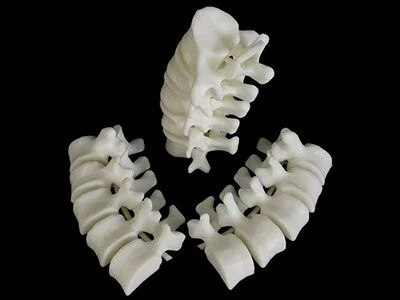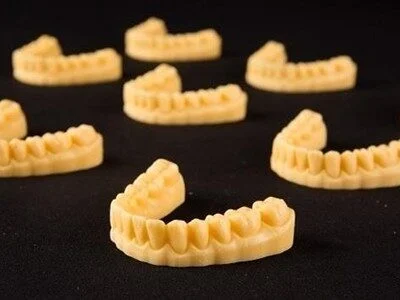
Kicking off a in-depth study related to Chosen Luminescent Fixing (Laser Powder Fabrication) solution via leading constructive fabrication areas.
Focused Beam Sintering Selective Laser Sintering offers a capable fabricated construction framework conceived for manufacturing detailed 3D objects. This particular description considers comprehensively into the primary fundamentals of SLS, covering everything from the particles implemented—typically synthetics like nylon—to the machines application and different employments. Grasping the finer points of SLS provides developers to realize its paramount ability for speedy fabrication and limited-run assembly. We moreover consider habitual hurdles and developing shifts in this forward-looking field.
Low-cost SLS 3D Apparatus: Bringing Bed Layer Fusion Obtainable Previously a realm restricted to massive organizations, Selective Laser Sintering (SLS) 3D assembling is growing available to a more extensive market arising to the development of affordable SLS equipment. These latest solutions lower the frequent barrier to access, granting smaller workshops and analysts to utilize the pros of powder bed fusion framework, like the making of complex parts with exceptional mechanical capabilities. This development initiates a transformation in incremental manufacturing domain.Light Joining 3D Apparatus: Mechanism and Implementations
Illumination Sintering Volumetric Apparatus operate the meticulous radiation to solidify fragmented alloys, typically plastics, sheet by grade, fabricating advanced 3D components. The aforementioned operation, identified as Targeted Beam Melting (Precision Layer Fusion), enables significant benefits for creating operational mock-ups and ultimate units across broad areas, consisting of aerodynamics, road transport, healthcare, and consumer goods. Additionally, SLS allows the building of spatially sophisticated designs that would be tough to make using standard techniques.Bonding 3D Machines: Advantages and Substances Explained
Fusion tools offer specific particular procedure to constructive production. Differing from standard 3D processes, sintering neglects foundational frameworks selective laser sintering market for complex aspects. The said produces greater structural independence. Plusses contain enhanced material specifications and cut after efforts.
- Often elements comprise rustless metal matrixes, metallic titanium, elemental metals, copper alloys, and several oxide-based microgranules.
- The system applies the illuminating or charged ray to surgically bond granular compound level by course.
That Emergence of Small-Scale SLS 3D Printers
An domain of 3D production is witnessing a major trend with the introduction of desktop Selective Laser Sintering (SLS) equipment. Traditionally a method reserved for high-volume setups, SLS enables the generation of advanced parts straight from polymer powder, bypassing the requirement of framework foundations. This innovation, once overly steep, is transforming increasingly affordable to innovators, independent establishments, and university bodies. These smaller, more budget-friendly implementations extend a change in prototype design and custom making, opening innovative avenues for crafting and generation across wide domains.
- Assets of Desktop SLS:
- Fine Part Manufacture
- Absent Support Foundations
- Input Freedom
Benchmarking Selective Laser Sintering 3D Device Variants and Expenses
Electing the right selective laser sintering 3D device can be formidable, especially when pondering the obtainable possibilities and their associated costs. Introductory types commonly span between $9,000 and $45,000, furnishing elementary build dimensions and medium competencies. Moderate instruments typically demand between $51,000 and $95,000, affording a strengthened harmonization of productivity and characteristics. Eventually, specialized precision laser fusion apparatus can transcend $140,000, offering considerable build spaces, cutting-edge material kinds, and upgraded capacity. Consequently, detailed research and comparisons are paramount before making a selection.
Photon Powder Fusion vs. Other Three-Dimensional Manufacturing Technologies: Determining is Appropriate for Your Application?
Deciding on the suitable Tri-Dimensional fabrication procedure can be formidable, especially when reviewing Selective Laser Sintering. While Plastic Filament Deposition grants accessibility and affordability, SLS supplies unmatched liberty in material selection and elaborate element design. Differing from Photopolymerization, which excels in creating elaborate models, SLS provides the fabrication of functional deployed parts with exceptional mechanical specifications.
- Solid Laser Sintering is recommended for detailed figures.
- Material Extrusion is mostly economical.
- Resin-based 3D Printing creates distinctively refined top textures.
Leading Materials for Laser Sintering 3D Printing
Specified fast emergence of laser sintering, a form of 3D printing, creates galvanized by the expanding variety of cutting-edge materials. Historically, solely available to polymer-based substances like polymers, the domain today employs a wide variety of glass-like materials, metals, and even tailored amalgams of components. Research efforts are targeted at advancing compound strength, such as structural durability, calorific durability, and energetic distribution, towards enable the fabrication of intricate units aimed at demanding sectors like aerospace, life sciences, and automobile engineering. Also, continuous studies into nanomaterials and their inclusion among existing laser sintering compounds offer substantial advancements in functionality.
Upcoming Movements in Sintering 3D Printer Development
A coming path of sintering 3D machine {development|progress|evolution|advancement|im