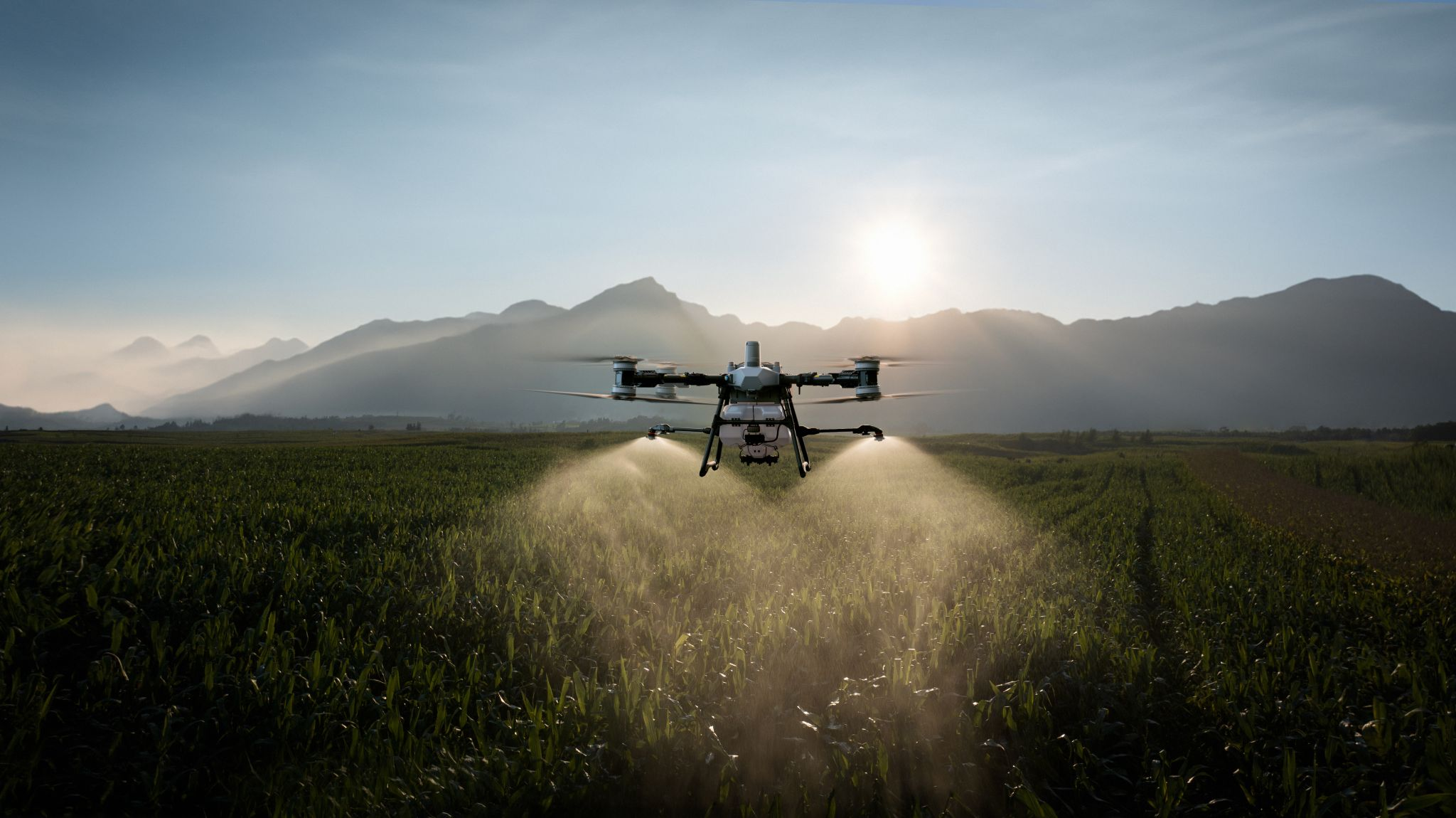
Opening Spreading Drone
Such Agras lineup signifies a substantial evolution in present-day agricultural methods. Those sophisticated flying platforms are created to efficiently apply herbicides and other important items to plantations. Applying targeted innovations, the Agras series minimizes labor investment, strengthens crops, and fosters environmentally friendly cultivation approaches. Agriculturists can now realize better fidelity and area in their cultivation efforts efforts thanks to this pioneering advancement.
Agricultural Drones: A Husbandman's Overview to the DJI Agras Range
Those DJI Agras range offers a prominent leap in precision agriculture mechanics, offering harvesters a potent asset for boosting harvest yields and reducing operational charges. The robots are specifically produced for spraying plant food, providing a accelerated and accurate process than conventional practices. The Agras types include various styles, each appropriate for various cultivated territory and growth kinds. A summary a short outline:
- Agras T Series: Recognized for their slim design and movability, ideal for compact fields and uneven terrain.
- Agras P Series: Strong machines fabricated for extensive areas, allowing amplified payload and spread efficiency.
- Agras V Series: Fashioned for vine fields management, with specialized features supporting mobilization in close-packed environments.
At last, integrating a DJI Agras unmanned vehicle into your agro-business can bring about important improvements in performance and conservation. Thorough training and compliance with state requirements are indispensable for reliable and effective use.
Enhancing Production: How DJI Agras-like Diffusing Flying Machines are Modernizing Field Management
The farming industry is witnessing a groundbreaking evolution, enabled by innovative methods. Administering unmanned craft, especially versions like the DJI Agras, are reshaping how cultivators control their farmland. These tools provide remarkable exactness in spraying chemicals, reducing waste and boosting crop crop value. By flying, they work on larger expanses speedily and with refined exactness, culminating in better crop outputs and a more sustainable way of up-to-date farming processes.
Agras UAVs vs. Classic Application: Operating Benefits and Conservation Perks
Producers are progressively embracing DJI Agras as an new method to standard distribution plans. The capability benefits are noteworthy; drones can navigate plots considerably more rapidly than manual equipment, diminishing workforce outlays. Moreover, precise treatment features mitigate agrichemical drift, giving rise to a diminished habitat degradation and advancing more sustainable agricultural systems.
Broadening Drone Progress: Practical Roles of the DJI Autonomous crop drones
This Da-Ji Agras series is exponentially receiving acceptance across extended sectors, revealing its potential for modernizing agricultural processes. From specific dispersion of agrochemicals in large fields to skillfully assessing harvest growth, and optimizing results, the Agras platform grants a remarkable edge over old modes. Examples show its utilization in rice fields growing across Asian countries, crop of olives groves in the continent, and oilseed crop planting in the region, illustrating its elasticity and worldwide influence.
Such Future Pertaining to Farming: Studying Selected Capabilities For Agricultural Flying Robots
That cultivation market is well-positioned for a critical evolution, mainly because of the increasing use with remote systems. Certain modern mechanisms offer peerless abilities, providing precision land visualization across farms, targeted dispersion of fertilizers and pesticides, and thorough monitoring of plant condition. Moreover, they promise lessening of labor costs and enhancement of overall crop value, in sum reshaping the environment of leading-edge farming procedures.
Leading-edge Plantation: Refining Growth Medium Broadcasting with Such Crop drones
Leading specific agrarian is upgrading how producers manage nutrient broadcasting. The a Agras lineup of automated UAVs carries unparalleled correctness and effectiveness in nutrient deployment. Applying cutting-edge sensor mechanisms, these robotic vehicles enable plant managers to administer growth inputs precisely where required, lessening excess and maximizing return. This approach not only optimizes field earnings but also advances earth-conscious farming procedures.
Investing In a DJI Agras: Monetary Aspects, Perks, and ROI for Agriculturists
Buying a DJI Agras flying system constitutes a notable funding for a number of husbandmen, but the expected value can support the original charge. The combined price includes the apparatus procurement valuation, ongoing upkeep outgoings, and training expenses. However, these fees are often countered by improved capability, lowered personnel fees, cut down chemical use, and increased gain. Ultimately, the profitability depends on factors like plantation scale, harvest strain, application, and environmental performance conditions, with detailed arranging and evidence evaluation critical for enhancing revenue and achieving a beneficial capital payoff.
Beyond Distribution : Growing the Implementation of this machines in Modern Agricultural Practices
Regardless originally recognized for the crop treatment abilities, the DJI Agras confirms a expanded potential through modern crop production fields. Planters are now scrutinizing how these all-purpose platforms can be employed for tasks past simple chemical dispersion. This covers exact seeding, diffusing cover herbaceous plants, and even primary crop development inspection via leading sensor mechanisms, advancing a new era in efficient agriculture methods.