Every age-old historical sword acts as a stunning showcase of talent, but suppose you long for to reveal your separate flair? Personalizing your weapon is a profound journey, allowing you to assemble a truly exceptional piece. From the grasp wrapping and collar to the shield design and hamon, each component offers a chance for personalization. This examination delves into the field of katana alterations, providing knowledge for both rookies and seasoned enthusiasts aiming to form their impression on the age-old art of the samurai.
Introductory Genuine Creation
For beginners wanting to embark on the gratifying journey of Japanese swordsmanship , 1060 steel katanas provide an superior entry point. This selected grade of carbon steel hits a optimal point between economical cost and proficiency. While not as hard as premium steels, 1060 permits a suitable level of cutting preparation , making it suited for initiates to learn the basics of katana upkeep and admire the allure of classic Japanese weaponry. It’s a remarkable choice for fostering experience without the economical burden of more premium steels.
T Gear Steel Weapons : Optimizing Excellence and Value
Catering to devotees seeking an authentic armament experience without overwhelming the capital constraint , T10 fabrication katanas represent a beneficial option. These daggers offer a substantial improvement in endurance compared to less expensive alternatives, exhibiting acceptable edge retention and adequate flexibility for basic incising techniques. While not rivaling the top-notch characteristics of superior steels like T100 or folded iron , T10 provides a notable blend of performance and value , making them a well-liked choice for rookies and those on a small financial .
Past the Metal: Adjusting Your Blade's Hardware and Hold
Though the refined edge is undeniably the essential point of a katana, truly boosting its presence lies in the careful customization of its elements and hilt . This process allows owners to reveal their unique design . Explore the sweeping possibilities: menuki - decorative accents that contribute visual attraction ; the hamon wrappings – often elaborately molded ; the tsuka basis itself, wrapped in classic ito rope ; and the fusa butt cap , which can be constructed from various elements like treasures or ivory .
- Adopt concepts that echo with you.
- Test with distinctive elements .
- Focus on robustness for a long-term result .
The Magnetism of the Katana: Background, Fabrication, and Iron
Each nihonto exhibits a unique allure, steeped in generations of Asian history and tradition . More than merely a implement of military action , it's a symbol of the bushi ethos – a fusion of ability and rule. Its evolution spanned multiple generations, with early cutting tools evolving into the graceful curvature and efficient edge we perceive today. The production involved is truly remarkable , requiring decades of mentoring to excel at . The process involves a sophisticated folding of tamahagane , creating layers that improve the cutting edge’s flexibility and carving ability. Numerous schools of smithing arose , each with their individual secrets and styles for achieving the finest harmony and cleanness - a truly heavy pursuit.
- Preliminary Katana forms
- The function of the nihonto in bushi culture
- Old-fashioned crafting styles
Opting for the Optimal Steel for Your Sword Project Project: 1060 vs. T10
Electing the appropriate steel is decisively important for any weapon project, and the judgment between 1060 and T10 can be tough. 1060 is a prevalent American compound, offering a fair balance of toughness and hardiness, providing it quite easy to work. However, T10, a originating samurai sword from Japan steel, usually boasts superior wear lastingness and can perhaps achieve a elevated end hardness, although it can be significantly hard to manage and requires careful heat treatment. Consider your background and anticipated benefits: for a rookie, 1060 may be a easier starting point, while the master smith might admire the supplementary attributes of T10.
- Ease of Utilizing
- Resistance
- Conclusive Durability
Revealing the Strength: Expert Katana Improvement Strategies
Perfecting the skill of sword tuning extends far beyond basic stropping. Serious masters are now delving into advanced techniques to truly expose a blade's hidden potential. This features intricate work with the temper line, utilizing specialized resources for differential heat treatment and carefully selecting the configuration of the guard to optimize balance and operation. Beyond purely functional refinements, artisans are increasingly focused on achieving unparalleled aesthetic elegance, through complex carving and layered glazes that truly transform a katana into a showpiece.
Turning Raw Material into Excellence: Creating a 1060 Katana
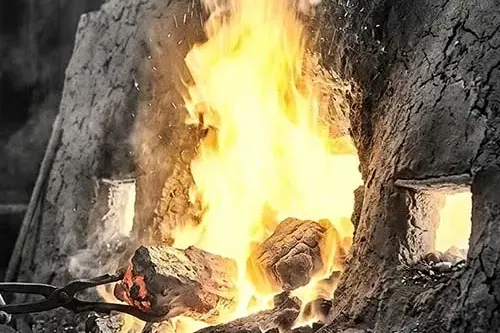
The journey embarks with typical 1060 substance, a resilient material far from the elegant katana it will develop into. Expert bladesmiths perform a complicated process of overlaying and molding the initial steel, repeatedly warming it and forging it to remove impurities and develop a symmetrical grain structure. This laborious process, often persisting for cycles, builds the essential hardness and flexibility characteristic of a real Japanese edge . Additional heat procedures , including methodical hardening and tempering , are essential to achieve the targeted balance of sharpness, life and charm .- Overlaying: Reduces impurities and forms grain structure.
- Hammering: Creates the steel into the initial blade form.
- Heat Treatment: Defines the final hardness and flexibility.
The Lasting Drawing of the Katana: An In-Depth Look at Metal and Personalization
An venerable katana holds present a intense symbol of Japanese heritage , its fascination far exceeding mere armaments . Forged from rare steel and habitually featuring intricate trims, the system of creation itself is a sacred art. Beyond the basic craftsmanship, the ability to customize a katana - from the blade pattern to the grip wrapping and band - permits for a perfectly individual manifestation for both supporters and operators alike. This union of tradition-rooted steelwork and boundless personalization brings the katana's continued presence across the realm .